Why Some Premium Offers Can't Scale (And How To Shift It)
Almost every high-ticket offer or service can be sold successfully with paid ads. But that does not mean every high-ticket offer or service can scale with paid ads.
This is something almost no one in this industry discloses. You will not find it in the content, in the case studies, or in the "we hit 10x ROAS" posts flooding your feed.
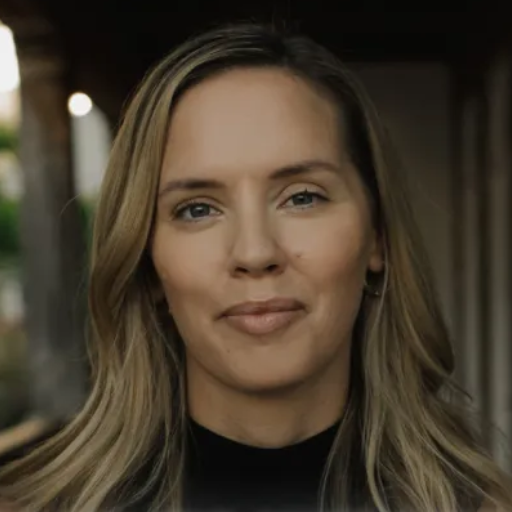
I'm Esther, founder of CottnOwl. I founded this business over four years ago, after leaving a Fortune 500 finance role where I spent nearly a decade working with ultra-high-net-worth families and celebrities. Since stepping fully into CottnOwl, I've invested over $300,000, good and bad, into mentors and strategy to learn exactly what I'm about to share with you.
Every Offer Can Sell. Not Every Offer Can Scale.
It does not matter whether you are a service-based business like a CPA or financial advisor, or a coach or consultant. Almost every offer can successfully sell with ads. That part is true across the board.
What is not true across the board is scalability.
When you hear founders online talking about a 4x or 10x return on ad spend, they typically have a broad offer speaking to a broad audience, one with a nearly limitless supply of potential clients.
If your offer is highly specific, say, you only work with founders generating a million dollars annually in revenue, you can absolutely sell that offer successfully through paid advertising.
But you will very likely find that it is extremely difficult to scale.
Why a Narrow Audience Creates a Hard Revenue Cap
Here is what happens.
You will discover a fairly clear cost to book a call and a clear cost to acquire a client at that caliber.
But once you've done everything correctly on the back end, the conditional logic, the CAPI setup, the data pulling cleanly into your CRM and ad account, and you increase ad spend expecting proportional growth, the offer often simply will not scale further.
There is a limited supply of founders who are actually looking for your specific offer at any given moment in the market.
Spend more, and you still will not exceed what that specific, narrow audience can produce.
There is nothing wrong with that.
But this is precisely where I see so many founders and prospective clients run into trouble.
They have an excellent offer, one genuinely desired by a small, specific subset of people, and they turn ads on without a realistic expectation of what their cost to acquire a client will actually be.
The cost to book a call will likely be higher, and the ad platform will take longer to learn who to serve your ads to, simply because the audience itself is so small.
Once you've reached that audience, you've reached it.
From there, it's a matter of testing new creative and refining, not spending your way past a ceiling that was never about spend to begin with.
Why Founders Misdiagnose "It's My Offer" When It's Not
This is the piece I most want founders to hear: when this happens, the instinct is almost always self-doubt.
Founders start to believe it's their offer, or that nobody wants what they're selling, or that something is fundamentally broken.
Ninety percent of the time, that is not what's actually happening.
To be clear, messaging and funnel execution absolutely matter.
If your messaging is off or your funnel isn't built correctly, that will show up in your numbers too.
But assuming all of that is dialed in and you're still not seeing the call volume you'd hoped for, it likely doesn't mean your ads are in front of the wrong people.
It means you've reached the maximum of what that specific offer, at that specific audience size, is capable of producing.
The Missed Opportunity Almost Every Founder Has
This is where I see the biggest opportunity go unclaimed, in nearly every founder I've worked with over the past four years, myself included in the early days of CottnOwl.
We get so laser-focused on one offer, one specific client, one vision of who we want to serve, that we overlook the broader audience we're equally equipped to help.
If you've determined your revenue is capped and your audience for this particular offer is genuinely tapped out, it may be time to look at what else you know how to do.
Is there a version of your expertise that could appeal to a broader audience, perhaps founders earlier in their journey, at six figures rather than seven?
That is where a second offer becomes an opportunity to compound the revenue you're already generating, rather than replace it.
A Second Offer Doesn't Mean a Lower Price
I want to close on this, because it's a mistake I see constantly.
Just because a second offer is broader does not mean it needs to be priced lower than your first offer.
Many founders treat their original, laser-focused offer as their premium offer by default, and quietly undercharge for the broader one, even when it delivers equal or greater value and reach.
You should not undercharge.
As long as your market is willing to pay it, and you're prepared to test and validate the new offer properly, it can likely be priced just as high, sometimes higher.
If you've done everything right, messaging tested, funnel dialed in, creative refreshed, and increasing ad spend simply isn't bringing in more people, it's very likely not your strategy.
It's your offer's natural ceiling.
That's not a reason to tear it down or walk away from it.
It's can be signal to build alongside it: a second offer, drawn from what you already do exceptionally well, built to reach a broader audience, and priced with the same confidence as the first.